
Tax saving is not just a saving after the completion of a financial year. It requires a calculative analysis of how taxable income is determined based on the new tax regime. Apart from that, individuals need to analyse the eligible deduction amount and exemptions in the tax treatment. A taxpayer who is earning 10 lakhs annually may have a different tax liability from another person who is earning the same amount due to their source of income and eligible deductions, employer contribution and other related factors. Hence, the focus is to minimise the tax liability with personalised tax treatment.
The new Income Tax Act 2025 takes effect from 1st April 2026. There are very few provisions related to the Income Tax Act of 1961 which are used by taxpayers. In order to analyse the tax-saving factor, there is a need to analyse the old and new tax regimes. As per the new taxation structure, there is a rebate under Section 87A for individuals having income up to 12 lakh.
Use Section 80C strategically
There is a relevant section in Section 80C of the Income-tax Act read with Section 80CCE. Corresponding provision for tax year 2026–27: Section 123 read with Schedule XV of the Income-tax Act, 2025. The aggregate deduction limit remains ₹1.5 lakh for eligible payments, subject to the statutory conditions.
This deduction is relevant for individuals and Hindu undivided families in taxation.
Eligible employee EPF contribution is ₹60000
Life insurance premium: ₹20,000
PPF contribution: ₹40,000
Total eligible payments: ₹1,20,000
Maximum aggregate deduction ₹1,50,000
Remaining potential deduction capacity ₹30,000
Strategy: First, calculate the EPF contribution and other eligible payments. Then determine if the EPF contribution is required.
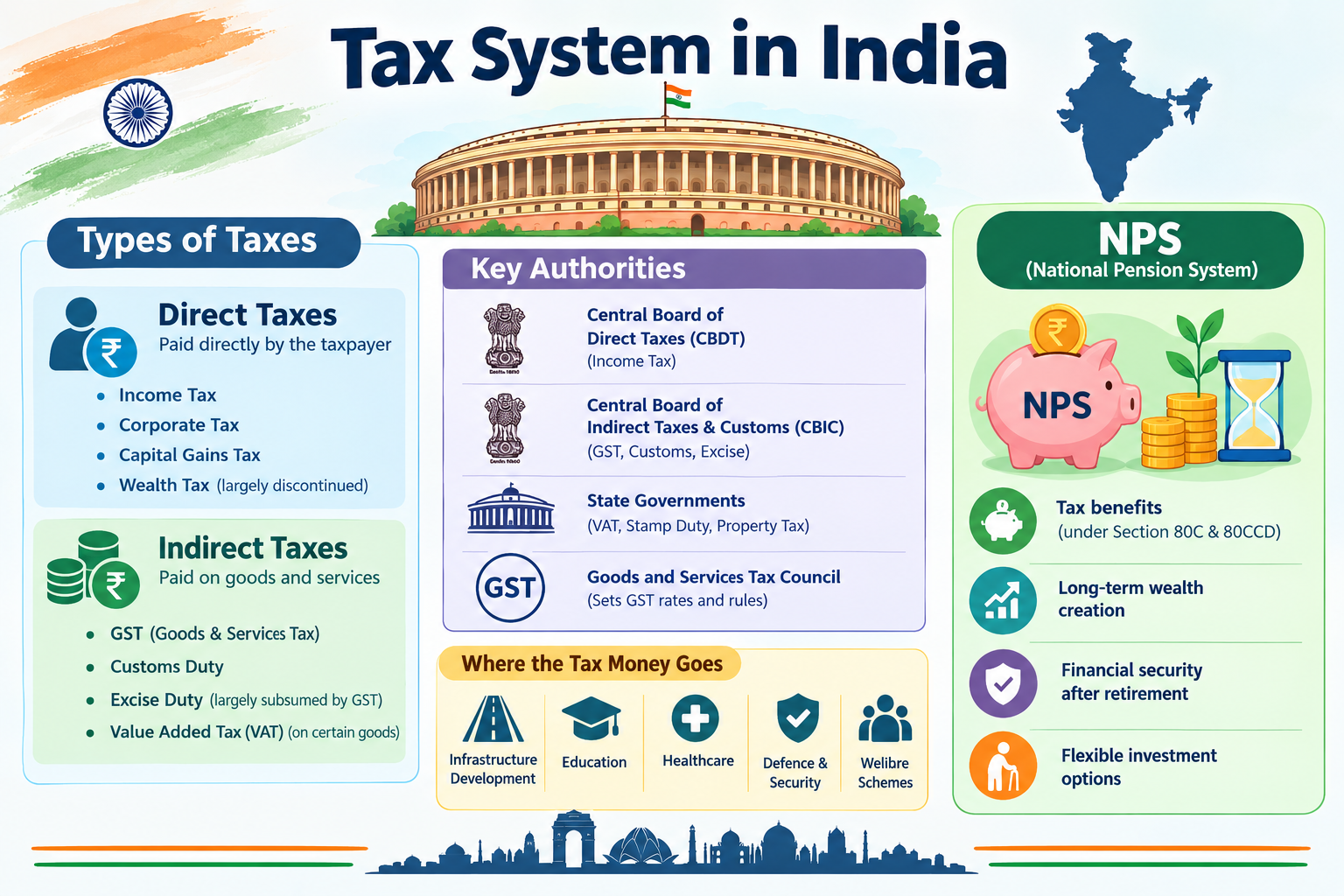
1. NPS for planning retirement and potentially reducing tax
The National Pension System is beneficial for long-term retirement planning. The entire tax treatment depends on whether the contribution is made by the employee or the employer. Under the earlier Act, Section 80CCD allowed voluntary contribution within the prescribed limits and the overall applicable deduction ceiling. Under Section 80CCD of the earlier Act, eligible taxpayers could claim an additional deduction up to 50,000. Similarly, the employer's NPS contribution is another factor to be considered. Do not assume that every NPS contribution is deductible for both tax regimes.
2. Savings through health insurance premium
There is a section 80D which indicates
Deduction for self, spouse and dependent children ₹25,000
Self and family, where the eligible insured person is a senior citizen ₹50,000
Parents below 60 years: Additional ₹25,000
Senior-citizen parents: Additional ₹50,000
3. House Rent Allowance (HRA) exemptions
Section 10(13A) of the Income-tax Act, 1961, read with Rule 2A reflect the House rent allowance to taxpayers
Calculation criteria for HRA
1. Actual HRA received.
2. 50% of eligible salary for a house in Mumbai, Kolkata, Delhi or Chennai, or 40% elsewhere.
3. Actual rent paid minus 10% of eligible salary.
4. Home loan deductions
Section 24(b): Eligible interest on borrowed capital for a house property.
Section 80C: eligible principal repayment, subject to the overall deduction limit.
Section 80EE or Section 80EEA: additional interest deductions for qualifying loans meeting specific historical eligibility and loan-date conditions.
5. Education-loan interest if eligible
A sper 80 individuals can get an eligible deduction for an education loan taken for higher education. However, interest is deductible, not the principal.
6. Deductions for donations
You can save tax by making donations to specified funds and charitable institutions.
7. Savings-account interest
There is a deduction of up to ₹10,000 from savings bank interest.
8. Savings from capital gains
There is a separate tax treatment for the deduction from short-term and long-term capital gains tax.
Finally, you have to consider expenses strategically to gain an advantage from the tax filing.
Be the first to comment on this article.