
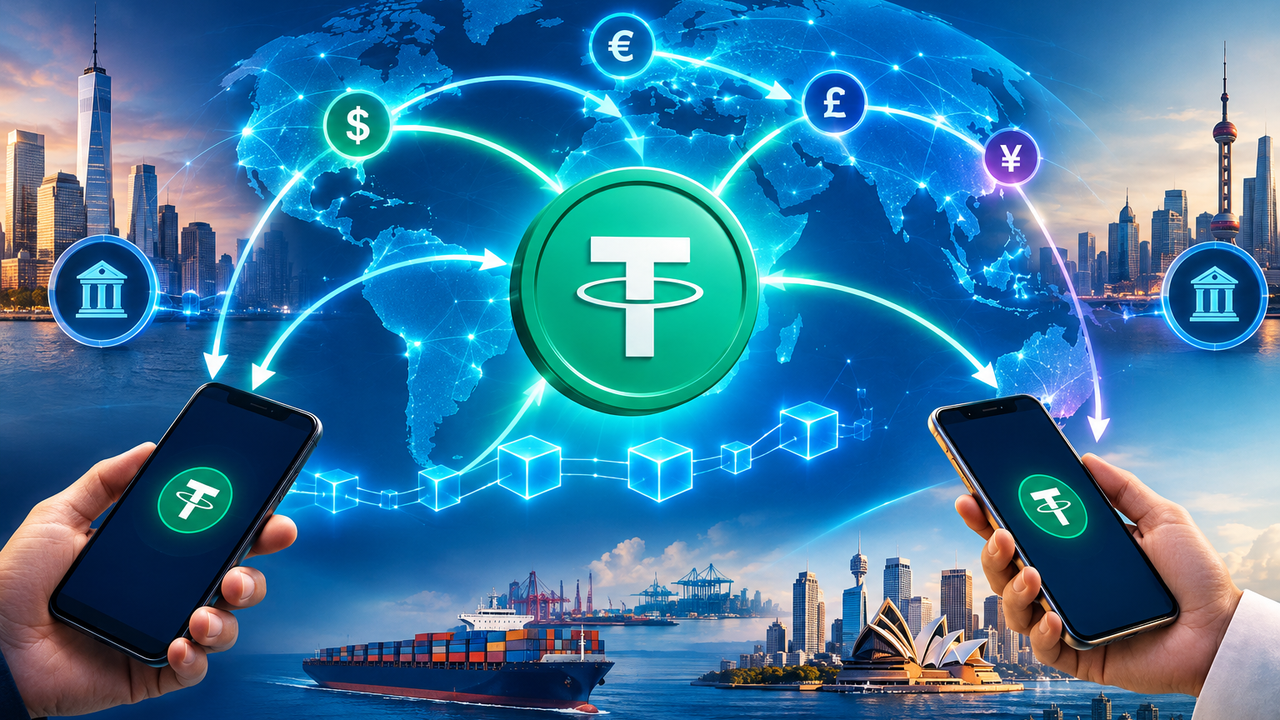
For the last few years, cryptocurrency has become an emerging digital asset for traders and speculators. However, one of the major uses of cryptocurrency is in the payment system. Nowadays, stablecoins like Tether’s USDT is used for transferring dollar-dominated values in different blockchain networks. Tron blockchain is another example of a stablecoin. In a report, it is identified that Tron is processing approximately $160-$180 billion in stablecoin transfers per week.
What Is Stablecoin?
It is a kind of digital asset developed to be used as an alternative to the most valuable asset (currency), like the dollar. It is developed in such a way that 1 USDT is close to 1 dollar. A stablecoin reflects stable currency value, and for this reason it is highly relevant and safe for users, whereas cryptocurrency fluctuates significantly due to the volatile market environment. For this reason, stable currency is preferred for transferring money. Instead of sending dollars through the banking system, users can convert local currency into USDT. This process is highly relevant and trustworthy.
Why Tron Has Become Important for USDT
USDT is available on different blockchain networks, and Tron is widely used for transfer activity. Business organisations are using it to transfer amounts without following any traditional banking process. However, it requires $0.07 transaction fees, and the actual cost varies based on wallets, exchanges, and liquidity providers.
How does it move in different countries?
In the case of stablecoins, the sender’s local currency is converted to USDT through blockchain technology. If the currency is different from the USD, then the USDT is converted to that local currency. An end-to-end data encryption process is conducted to transfer the amount securely.

How it is used in a new payment network
Blockchain technology follows an automated system, which does not require validation from the banking system. In the banking system, approval is required. Traditional payment networks connect financial institutions with payment providers. However, the blockchain facility is used to transfer amounts using a blockchain address. There is a requirement of authentic exchange between a bank payment possession wallet to make a real-world payment ecosystem.
Why is it relevant from a business perspective?
Multinational companies need to conduct business activities with overseas customers. Consequently, they need to pay in the local currency of their respective country. For this reason, cryptocurrency or stablecoins are used to pay the amount easily to the respective parties. Additionally, stablecoins give the opportunity to reduce the challenges associated with transactions through cryptocurrency exchanges and the traditional banking system.
Advantages of Stablecoins
No time limit for settlement (24/7)
Blockchain technology is beneficial for operating 24/7 with 100% accuracy, which is not applicable to traditional banking systems.
Accessibility across the world
A blockchain wallet is easily accessible from any country, and it can improve user experience, which is highly relevant in the complex environment. However, strict regulation often creates challenges for the transaction of USDT.
Lower Network Costs
The network cost is cheap for transferring money through blockchain technology. However, the total cost varies based on cross-border rules.
Easily programmable
This type of stablecoin can be easily integrated into both software and blockchain-based applications.
Could USDT Become a Global Digital Dollar Rail?
USDT is an emerging stablecoin across the payment system in the global market. There is a misconception that USDT is a digital dollar controlled by the US government. However, it is developed to track the digital value of dollars through a decentralised digital platform. If it maintains transparency, then there is a high chance of expanding its activity across the blockchain-based financial system.
Be the first to comment on this article.